
News
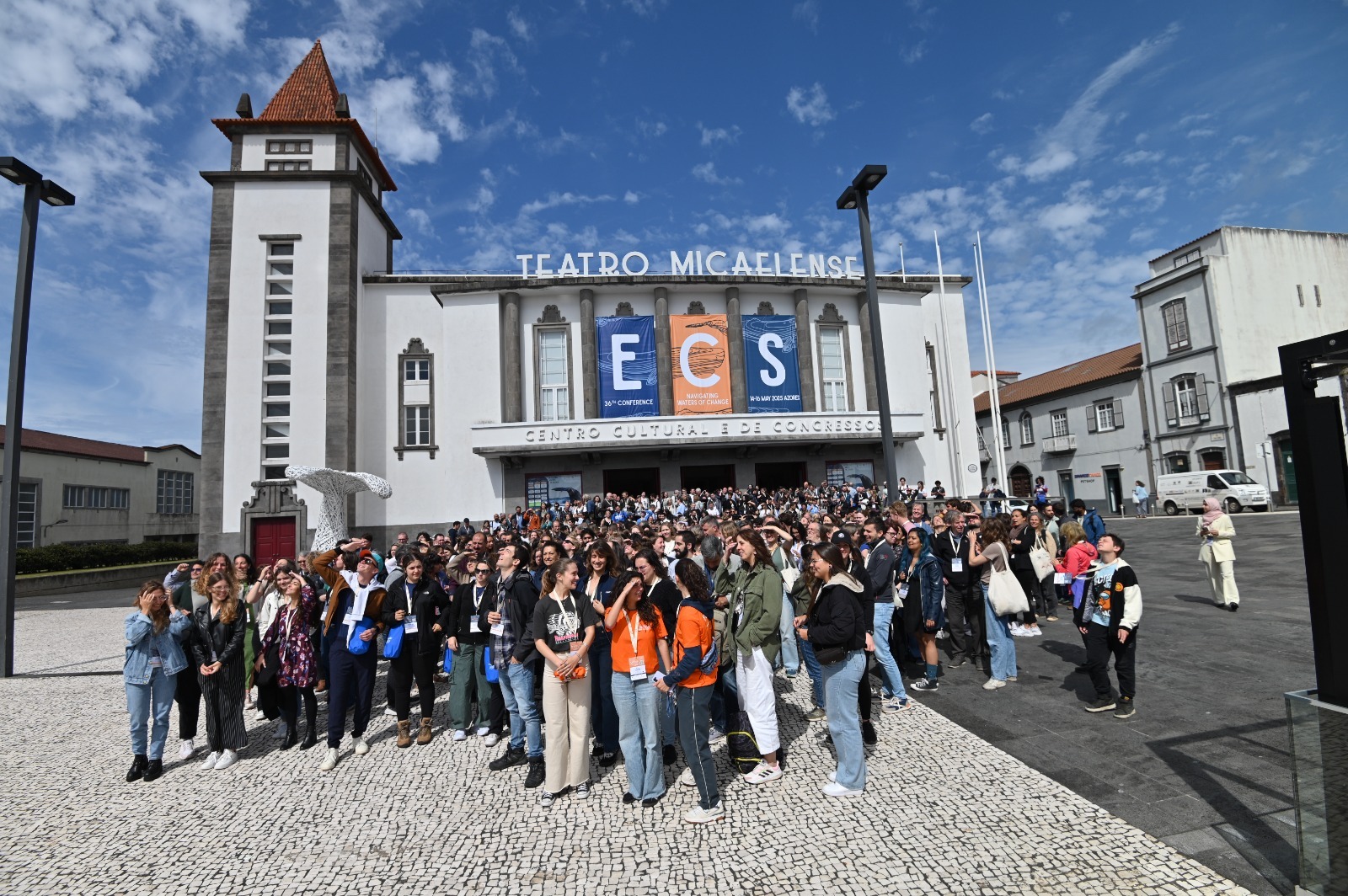
The European Cetacean Society (ECS) conference was held in Ponta Delgada, Azores, from May 2025. Patrick Lyne, a committee member of the MMOA, was fortunate to attend and has some fascinating insights from the event, below are his words from his time spent in the Azores.
This has been the largest conference of the ECS every with over 700 attendees and 24 workshops on the two days prior to the conference proper. Huge thanks to all speakers and attendees at the Irish Whale and Dolphin Group (IWDG) workshop on mitigation and baseline data from which we will be working on a final report shortly. The conference was a huge opportunity to catch up with old friends and new and was truly exhausting but hugely rewarding.
Read more: European Cetacean Society (ECS) Conference 2025 –Ponta Delgada, Azores.
One of the best parts about working offshore is the incredible sightings and encounters our members have with marine fauna. As the 2025 field season is in full swing, we thought it would be interesting to hear from the Executive Committee as they recount interesting and exciting encounters they’ve had throughout their careers.
Mike Ambler
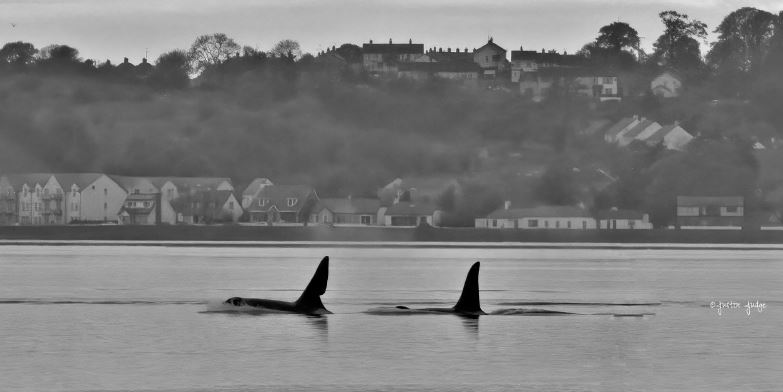
Perhaps the most memorable sighting I have had occurred in November 2016 whilst working on a project offshore Mauritania. We knew that we were working in an area where blue whales (Balaenoptera musculus) could occur, but the sighting that took place that day was still a surprise and mind-blowing. Just before the sighting, I had been photographing a brown booby (Sula leucogaster) that was flying just above the bow of the vessel. Suddenly, I heard the most powerful exhalation I’ve ever heard and looked to the side to see that an adult blue whale had surfaced next to the vessel, no more than 30 metres (m) away. I’d already got my camera in hand and switched on, from photographing the brown booby - so instantly started snapping. I radioed the instrument room, and soon there was a flurry of people coming up to have a look. The whale stayed close to the vessel for over an hour, offering many crew members a very memorable encounter.
Justin Judge
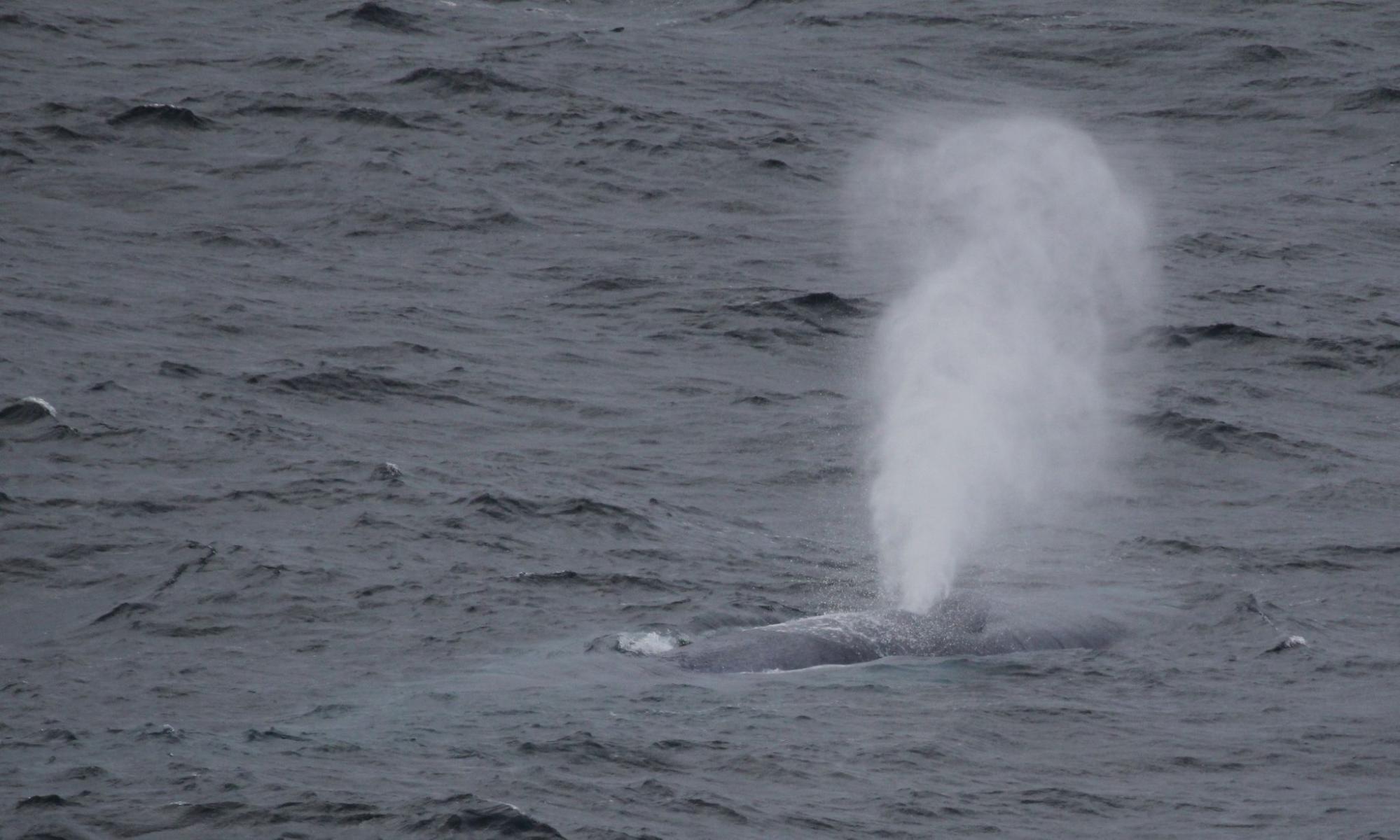
It was a calm Spring day on the shores of Strangford Lough, Northern Ireland, in 2020. I was wrapping up a shore-based watch for a hydro-power project and getting ready to head home. As with all of us observers, we never really switch off watch mode, and that day it paid off. I happened to cast one final look out to sea and sighted two large, black dorsal fins cruising down the Lough. My first killer whale (Orcinus orca) sighting! And not just any killer whales, it was the famed duo John Coe and Aquarius! The last two individuals of the Scottish West Coast population. To say I was starstruck is an understatement. No matter how many years I have been on watch, I still have the same level of excitement, not knowing what will show up. That day will stand out for me as a big one.
Christian Daniell
One particular sighting I will never forget was in 2017 when I was working at the Cape Eleuthera Institute in the Bahamas. I was assisting a researcher there working on sampling benthic organisms at depths of over 1000 m. While travelling to a survey site in a panga, we noticed a few dorsal fins breaking the surface of the water and decided to stop the vessel until they left the area. The researcher said that she had seen pilot whales (Globicephala melas) there before, and they would approach the boat out of curiosity. Upon stopping, we heard the distinctive sound of the blow approaching the boat; however, as soon as I saw the animals approaching us I realised they weren't pilot whales. They were lighter in colour, proportioned differently and most distinctively had prominent rostrums - they were a pod of beaked whales! Beaked whales are very poorly studied and rarely seen by people, so to have a small pod of them approaching our small boat was an incredible treat. They circled the boat a couple times, then as quickly as they came were gone- no doubt to forage deep below us in the Exuma Sound, Bahamas Islands. While I never got a good enough view to be sure, consulting with field guides and published sightings in the area led me to conclude they were most likely Gervais' beaked whales (Mesoplodon europaeus). Naturally, I spent the rest of the day jumping for joy with the rest of the team, and to this day, I will never forget the time these rarely seen whales decided to come say ‘Hi!’.
Carolyn Barton
One of the more notable sightings that sticks in my mind was when I was working on a seismic vessel in the Rockall Trough, Scotland, UK. It was a fantastic area to be in and a real privilege to see so many fin whales (Balaenoptera physalus). The bird life was exceptional too, with grey phalaropes (Phalaropus fulicarius), Sabine’s gull (Xema sabini) and great shearwater (Ardenna gravis), to name but a few. One day, I saw the fin of a lone cetacean heading towards the vessel during a line change. Not expecting anything out of the ordinary, I watched for it to surface again – and when it did, there was an unmistakable elongated beak poking out of the water at an angle. A beaked whale, almost certainly a Sowerby’s beaked whale (Mesoplodon bidens), although I would have liked it to hang around a little longer to get a better look to confirm my identification. The fisheries representative would have liked it to hang around longer too – he was frustrated when he came back from lunch to find he had missed its brief appearance. One of my all-time favourite sightings was of Atlantic white-sided dolphins (Lagenorhynchus acutus), I think probably somewhere to the west of Shetland. Two of the group jumped out of the water in a high leap towards each other, crossed over in mid-air and re-entered the water with perfect synchronicity, illuminated by the evening sunlight. Every day behaviour for them, over in a split second, but for me, a moment of perfection that I can still picture many years later.
Morgane Belleville
There are a few sightings I would love to describe, but if I have to pick one, that will be the one that I had the chance to share with my husband. It was his very first time he had ever encountered a big cetacean. Beyond the excitement of seeing a wonderful sea creature, sharing it with those you love makes the experience even more unforgettable. It happened last year. We were sailing from Martinique to Dominica in the Caribbean. There was no wind, the temperature was very hot, and the sea surface was almost glassy. No sails out then. The engine was turned on and we were progressing at 5 knots.
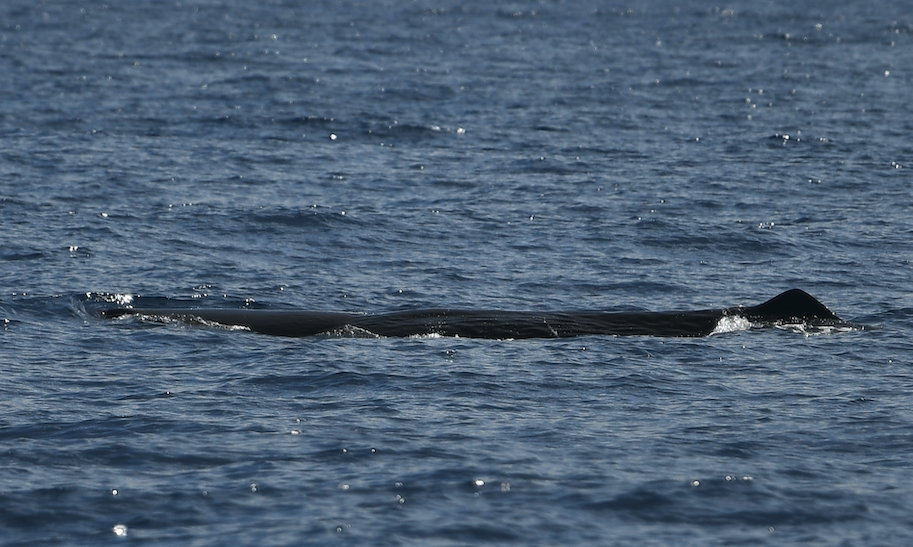
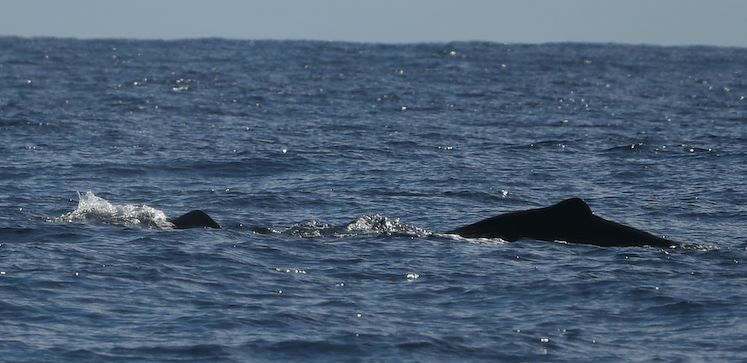
I was feeling sleepy with the movement of the boat and went to lie down for a nap. Suddenly, I heard my husband's voice waking me up: “I think a dolphin is coming in our way, you should check this out”. In 1 second, I grabbed my camera and jumped outside, looking for that dolphin, when I suddenly froze. There was no dolphin, but instead a beautiful young sperm whale (Physeter macrocephalus) was coming directly in our direction at a good pace. His back colour was brownish and he must have been around 6 meters long. Half the size of our sailing boat. He must have been very curious as he was approaching our bow with determination. As I was shouting (literally), the engine was immediately put to neutral while the sperm whale was still approaching straight to us. At his closest approach, maybe 20 m from our vessel, he suddenly changed course and left our position. As we were following him with our eyes, we suddenly noticed a big blow far away. There was another animal, and this one was way bigger, the mother, maybe. Both sperm whales joined together far from our position this time. It was almost difficult to spot them. We just had time to catch a few blows and for a few seconds, a beautiful fluke came out of the water before both of them disappeared from our sight. In the meantime, I launched a hydrophone and we continued to make this experience last (acoustically this time) a bit more.
Morgana Alvarenga
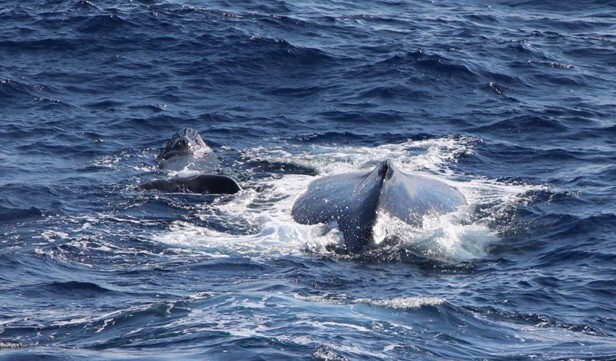
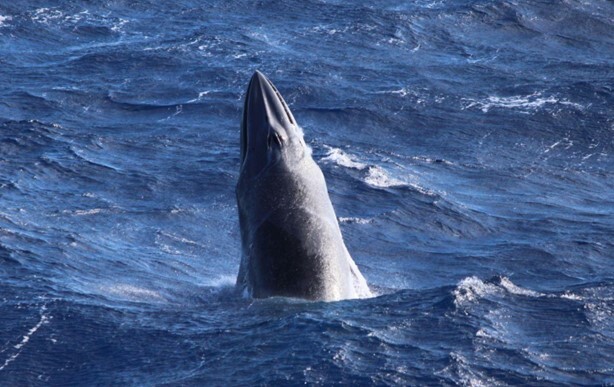
Two of my favourite sightings at sea were moments I'll never forget. One happened during a day of bad weather, the weather was off the charts, Beaufort scale and it was terrible visibility. Suddenly, this Minke whale (Balaenoptera acutorostrata) started breaching right at the bow, so close that it felt like we could reach out and touch it. Minkes are my favourites because you never know what to expect. They can seem boring one moment, and the next, they're full of crazy energy. I love how they launch themselves like little torpedoes or push the water with their heads. They are simply the cutest whales. Another unforgettable moment was capturing a humpback whale (Megaptera novaeangliae) calf that had just been born in the warm waters of Brazil. Even though the photo is not perfectly framed or lit, nothing compares to the feeling of photographing that little body completely out of the water. Just looking at the size of its head and tail compared to the mother’s body is pure love!
While these are our stories, we would love to hear yours! With the decades of experience MMOA members have accumulated we have no doubt you have some stories, and we'd love to hear them! Email us at
It has been another productive year for the Marine Mammal Observer Association (MMOA) and as we conclude 2024 we take note of our contributions to marine fauna mitigation and industry collaborations.
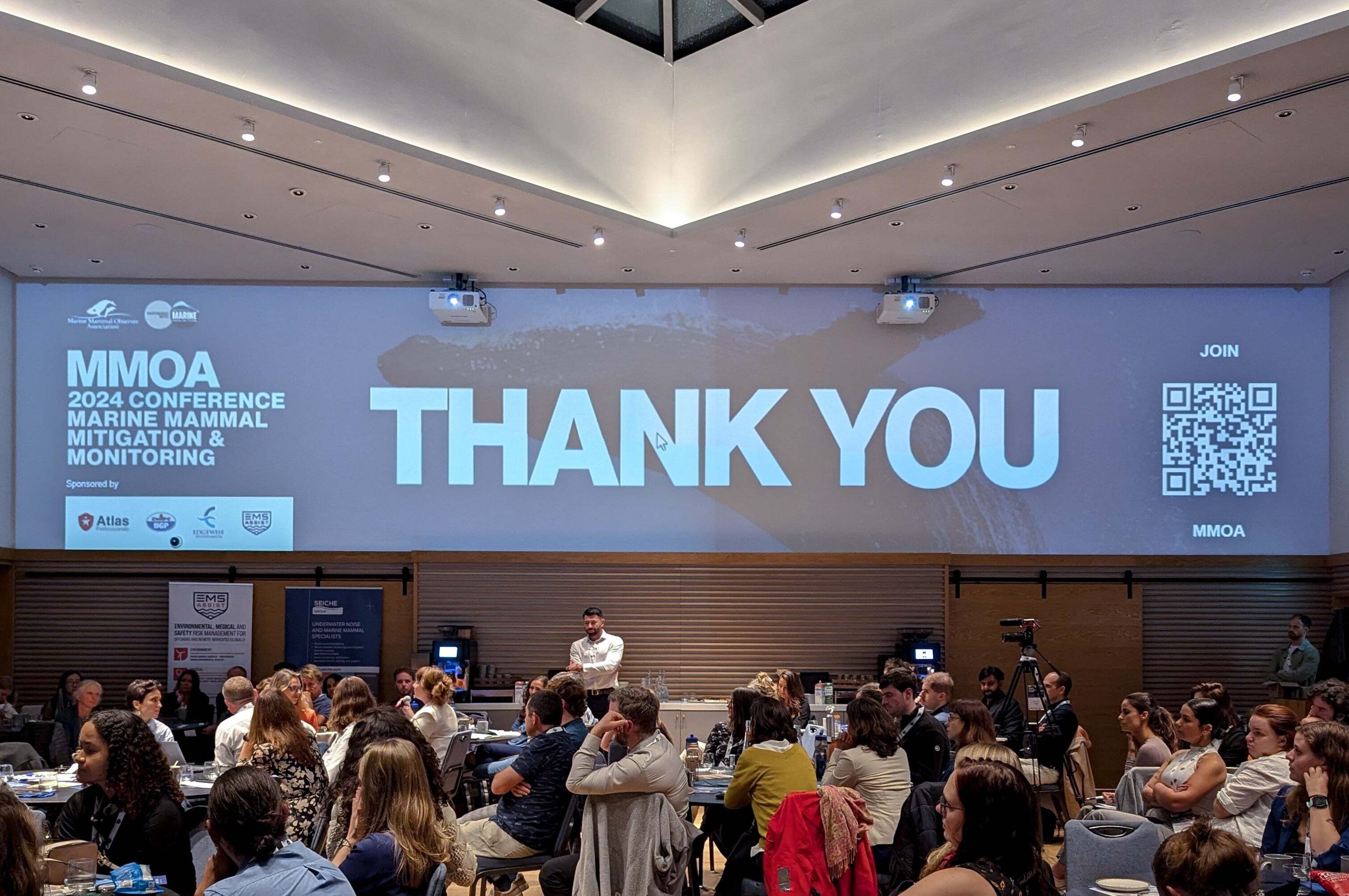
An achievement we are most proud of this year is hosting the first-ever marine mammal mitigation and monitoring conference in Edinburgh, Scotland, UK in September. Over 110 attendees arrived eager to learn more about the field and to connect with others. It was a highly successful event with over 90% of the participants connecting with someone new and over 80% expressing a sense of community after the event. We had a keynote talk from Ashley Noseworthy, Edgewise Environmental and have to give a huge thank you to all our speakers, sponsors and delegates. We couldnt have done it without you and your energy on the day!
Along with our mission and aims, the MMOA committee actively engaged in various events: we continued to participate as a stakeholder in the development of a regional action plan for underwater noise by The Convention for the Protection of the Marine Environment of the North-East Atlantic (OSPAR). The MMOA provided expert insight into underwater noise impacts to assist with their plan to reduce anthropogenic underwater noise to levels that do not adversely affect the marine environment. This commitment underscores the association's dedication to shaping policies that mitigate the impact of human activities on the marine environment.
The MMOA participated in the South Africa Scientific Roundtable virtual webinar organised by Energeo Alliance, where we shared a presentation on best practice mitigation and techniques. We have also engaged in discussions with the UN Ocean Decade Corporate Data Group regarding industrial data sharing of marine megafauna observations. We drafted a letter to the Ministry of Defence about the detonation at sea on 23 February 2024 (known as Operation FOSTER) and have been in communication regarding this event.
The MMOA proudly endorsed the Electricity Supply Board (ESB) funded Marine Mammal Observer (MMO) training programmes in Ireland for a second year running, which were open to graduates, final-year undergraduates and postgraduate students who are studying or working in the area of marine science or related disciplines in those localities. We also endorsed the BGP Empowering Nigeria programme, open to aspiring MMOs in Nigeria which provided training for up to 20 candidates in marine fauna mitigation.
The MMOA also in partnership with the IMarEST established an annual bursary. The Bursary provides aspiring Marine Mammal Observers (MMOs), Protected Species Observers (PSOs) and Passive Acoustic Monitoring (PAM) Operators with the necessary resources to allow them to enhance their skills and expertise through participating in relevant specialised training programs or obtaining equipment.
We received renewals and invited new Associate, Full and Corporate members this year as well as bringing back existing members. The association proudly welcomed the return of Corporate Members, including Atlas Professionals, Edgewise Environmental, EMS Assist Ltd, Geo-quip Marine, Nautica Environmental, Ocean Ecology, and Whale Seeker, strengthening collaborative efforts towards responsible marine mammal observation and mitigation services. All our membership tiers now have access to our forum, where you can search for information, advice and job opportunities and we have big plans to overhaul this in 2025. To find out more about membership, take a look at our joining pages.
As the MMOA reflects on a year of accomplishments, the association remains poised in its mission to lead global efforts in marine fauna observation and mitigation practices in the years to come.
From everyone on the Executive Committee, we would like to thank you all for your support and wish you happy holidays as we near the end of 2024!
The MMOA is proud to announce that our long-standing Executive Committee member and former Chair (2015-2020), Niru Dorrian, has been appointed as Ambassador to the United Nations Decade of Ocean Science and Sustainable Development by our marine partners, the Institute of Marine Engineering, Science, and Technology (IMarEST). Niru has pledged to promote the safe and sustainable use of the ocean by leveraging the collective expertise of IMarEST members and its partners.
As the largest professional body of its kind, the IMarEST role of Ambassador aims to align its activities with the core objectives of the UN Ocean Decade.
Niru’s priorities as Ambassador include:
- Catalysing research, innovation, and policy alignment by drawing on the collective knowledge of IMarEST members and wider community.
- Engaging marine professionals as stewards of the ocean, fostering high standards of practice and recognition of skills.
- Promoting equity, inclusivity, and transparency in the marine sector.
- Undertaking global advocacy and building partnerships to advance sustainable ocean use.
Reflecting on his appointment, Niru stated, “Becoming UN Ocean Decade ambassador is a great responsibility and an immense honour. I hope my work over the next three years will help the IMarEST make a lasting contribution to the future of our oceans.”
Peter Sheppard, Head of Technical and Policy at the IMarEST, remarked, “Niru is passionate about the marine world, and I know he will make a huge difference as UN Ocean Decade ambassador. We are indebted to dedicated members like Niru, who work tirelessly to ensure our industry has a sustainable future.”
Niru has long been instrumental in shaping marine science within IMarEST, where he setup the marine partnership between the MMOA and the institute in 2018, also playing a pivotal role in establishing the Marine Mammal Special Interest Group (MMSIG) in 2020 and co-chairing it since, leading numerous outreach and educational initiatives.
Ashleigh Kitchiner, Chair of the MMOA, added, “We are so proud of this appointment for Niru and all his efforts. The MMOA will continue to support the Ocean Decade through our activities where practical. We have recently applied for UN Ocean Decade endorsement for our newly launched MMOA-IMarEST Bursary for aspiring MMO and PAM operators, which offers £750 annually, increasing opportunities for graduates internationally.”
This appointment marks an exciting chapter for the MMOA, IMarEST, and the wider professional marine community. We look forward to supporting Niru’s impactful work as Ocean Decade Ambassador as we collectively strive towards a sustainable ocean future.
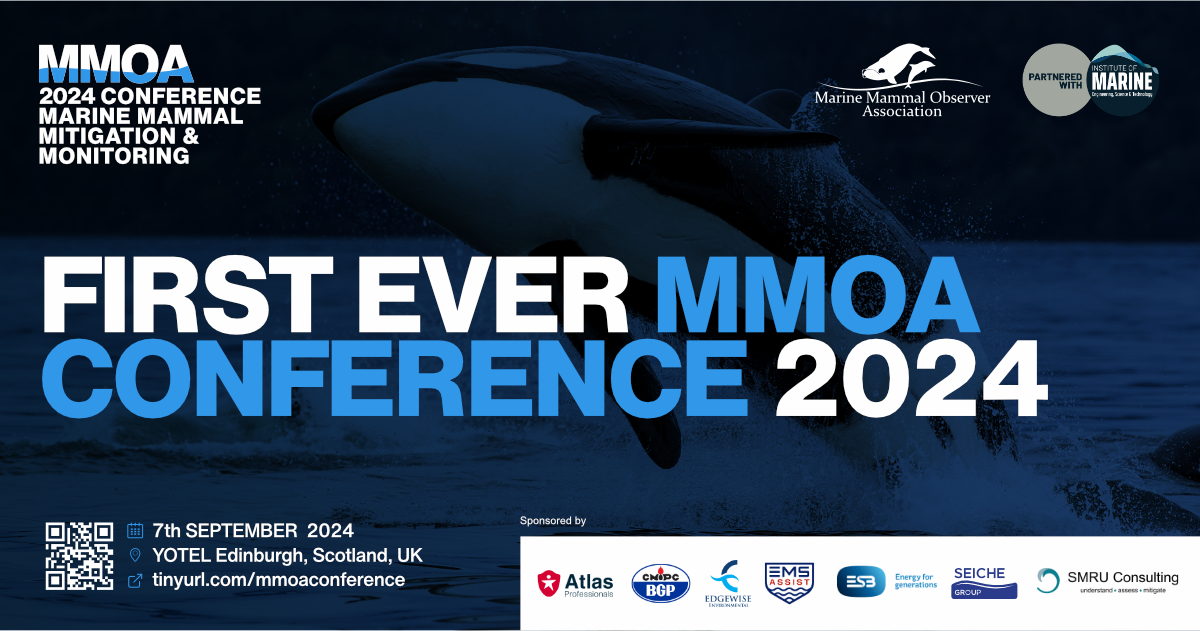
The Marine Mammal Observer Association (MMOA), in partnership with the Institute of Marine Engineering, Science and Technology (IMarEST), successfully hosted the inaugural MMOA Conference on the 7th September 2024 at the Yotel Hotel in Edinburgh, Scotland. As the first dedicated event of its kind, the conference brought together marine mammal mitigation professionals, consultants, researchers, and industry representatives from across the globe.
The one-day conference served as a landmark gathering for those working in marine mammal monitoring and mitigation, offering a platform to explore the latest developments in regulation, offshore technologies, data analysis, and professional standards. The programme included expert talks, a panel session and networking activities designed to encourage collaboration and elevate discussion across career levels.
Highlights and Feedback
- Strong attendance and engagement: Delegates, speakers, and sponsors included both early-career professionals and senior practitioners.
- Top-rated sessions: Most popular topics included freelance consulting, technological innovation, mitigation practices, and licensing requirements.
- Valued networking: 93.8% of attendees made new connections, with many praising the opportunity to finally meet long-term collaborators in person.
- Community atmosphere: 87.5% of participants reported feeling welcomed and supported, with the event described as “inclusive,” “inspiring,” and “well-organised.”
Looking Ahead
The feedback underscored the value of the event to the mitigation community and called for future enhancements, including:
- Expanding to a multi-day format
- Including workshops on data processing, mitigation tools, and field techniques
- Formalising networking opportunities through structured tools and mentoring schemes
The MMOA is proud of the success of this pioneering event and is exploring plans to make it a recurring fixture in the professional calendar. The conference affirmed the need for a dedicated, collaborative space to advance marine mammal mitigation practice—and we look forward to building on its momentum.
More Articles …
- MMOA Endorsement ESB MMO Training Programme 2024
- Day of the Seafarer and Offshore Etiquette
- JNCC Realeases New PAM Guidelines
- MMOA Champions Best Practices for Conservation at Stakeholder Meeting on Marine Mammal Mitigation
- International Womens Day - Interview with Daniella Bordon
- New Important Marine Mammal Areas (IMMAs) approved!
- ESB marks completion of MMO Training Programme
- Distance Estimation using Reticular Binoculars
- Notes from the Field – MMOA Executive Committee Member John Keth Faeldonia
- Notes from the field – MMOA Member Morgane Belleville
- End of Year Update 2023
- MMOA endorses ESB Marine Mammal Observer Training Programme
- ECS Conference 2023 - O Grove, Galicia, Spain.
- MMOA Members on The Ocean Cleanup
- MMOA attends BEIS/JNCC PAM workshop
- COVID-19 and the Marine Mammal Mitigation Industry
- MMOA Chairman Attends AEECoW Conference 2019
- MMOA attends EAGE conference in Copenhagen
- MMOA Member Launches Canadian Training Consultancy: Edgewise Environmental
- MMOA attends ECS Conference 2018
