
News

Following the success of the inaugural Marine Mammal Observer Association (MMOA) Conference held in Edinburgh in September 2024, the MMOA and the Institute of Marine Engineering, Science and Technology (IMarEST) are delighted to announce the return of their flagship international event: the Global Marine Mammal Mitigation Conference 2026.
Taking place online on 24th November 2026, this biennial conference will bring together marine mammal mitigation professionals, scientists, regulators, environmental consultants, technology developers, offshore industry representatives and conservation practitioners from across the world to discuss the current state and future direction of marine mammal mitigation.
The 2024 conference demonstrated the clear demand for a dedicated professional forum focused on marine mammal mitigation. Delegates praised the event's inclusive atmosphere, high-quality technical presentations and valuable networking opportunities, with over 93% of attendees reporting that they established new professional connections. Feedback highlighted the importance of creating a collaborative space where practitioners could share knowledge, discuss challenges and advance professional standards across the sector.
Building on this momentum, the 2026 conference will adopt a truly global perspective, examining how marine mammal mitigation has evolved across different jurisdictions, industries and environments. The event will provide an opportunity for professionals to explore emerging challenges, compare international approaches and identify opportunities for strengthening marine mammal protection worldwide.
A central theme of the conference will be understanding where the profession stands in 2026 and how it can continue to develop in response to rapidly changing marine industries and environmental pressures. Sessions will explore the latest research and practical applications relating to underwater noise, mitigation effectiveness, offshore development, technological innovation and environmental stewardship.
Delegates can expect presentations and discussions covering a diverse range of topics, including advances in passive acoustic monitoring, artificial intelligence, autonomous monitoring systems and drone technologies, alongside developments in regulation, governance and international consenting frameworks. The programme will also consider emerging sectors such as and the implications of expanding offshore activity for marine mammal mitigation.
Recognising that successful marine mammal mitigation relies on collaboration across disciplines and communities, the conference will explore the role of Indigenous and local knowledge in marine environmental management and examine how different knowledge systems can contribute to more effective conservation outcomes.
The event will also focus on the future of the profession itself. Discussions on competency, professional standards, career pathways and professional recognition will provide valuable insights for both established practitioners and those entering the sector.
As an online event, the conference will be accessible to a global audience, creating opportunities for knowledge exchange across geographical boundaries and ensuring broad participation from professionals working in research, consultancy, regulation, conservation and industry.
Whether you are a Marine Mammal Observer, Passive Acoustic Monitoring specialist, environmental consultant, offshore project manager, regulator, academic researcher or student, the MMOA & IMarEST Global Marine Mammal Mitigation Conference 2026 offers a unique opportunity to learn from leaders in the field, expand your professional network and contribute to discussions shaping the future of marine mammal mitigation worldwide.
Event Details
Date: Tuesday 24 November 2026
Time: 09:30-17:30 CET
Format: Online
Further details on speakers, sponsors, agenda and registration will be announced in due course.
The MMOA and IMarEST look forward to welcoming delegates from around the world for what promises to be an engaging, thought-provoking and influential event for the global marine mammal mitigation community.

Lorenzo Scala, Marine Mammal & Offshore Technical Lead at Seiche, authored this article, and all views expressed reflect Seiche’s professional expertise in offshore acoustic monitoring and mitigation. This publication supports the MMOAs 2026 strategy to Support Professional Development, helping practitioners strengthen their skills and industry knowledge.
What is PAM?
Passive Acoustic Monitoring (PAM) has become an essential tool in the suite of technologies and methods available for marine mammal mitigation and monitoring. PAM is a common means of detecting vocalising marine mammals, enabling continuous, autonomous data collection and providing an opportunity for detection of deep-diving and cryptic species. There is an increasing need to monitor and report marine mammal baseline information, particularly offshore. This is important for environmental impact assessment (EIA) and mitigation of disturbance from human activities.
Two broad aspects of PAM for marine mammals in the offshore industry are real-time mitigation and baseline monitoring. Real-time mitigation, uses arrays of hydrophones deployed from an offshore survey vessel or construction platform. The hydrophone array is typically cabled to a monitoring station housing PAM electronics, which process the incoming acoustic signals through a series of data acquisition units and output to real-time processing and monitoring software.
Baseline PAM monitoring provides information on temporal variation in species occurrence, distribution, and density. These data feed into population‑level impact assessments for offshore industry activities. Such information is requested as part of the EIA approvals process for consenting of offshore infrastructure construction activities, such as offshore wind farm development. For long-term monitoring programmes, fixed or static PAM devices are deployed on seafloor mounted moorings in carefully designed arrays or nodes across the area or region of study.
Static PAM moorings typically consist of single, or multi-channel autonomous recording units (ARUs) configured to record at an appropriate sample rate and duty cycle to enable monitoring of marine mammals on deployments of up to several months. ARUs process acoustic signals and archive the data as a series of timestamped sound files (.wav) to micro-SD cards which are extracted and replaced periodically during mooring service visits. ARU data is processed and analysed offline using a suite of acoustic analysis software. Baseline monitoring programmes for marine mammals can last for several years and may be designed to capture monitoring periods pre, during and post construction of offshore developments to enable assessment of behavioural impacts at population level in response to offshore construction.
There is a large scope for innovation within PAM technology, including variations in real-time and offline/autonomous data collection. Technologies may range from remotely monitored real-time PAM systems to automated or AI driven classifier enabled monitoring systems, multi-channel seabed mounted lander systems, portable light-weight PAM devices for small vessel offshore operations, or long-term continuous monitoring PAM buoys with satellite data transmission.
The role of the PAM Operator in industry primarily relates to mitigation activities, requiring the real-time detection, classification and localisation of marine mammals from their vocalisations within the context of an exclusion zone surrounding an industrial noise source, such as a seismic source array used in geophysical exploration, or impact pile driving during the installation of offshore wind turbine foundation monopiles. In the UK, MMOs are required to undergo formal mitigation training by a Joint Nature Conservation Committee (JNCC) approved provider. In addition, PAM training courses are designed to deliver the fundamentals of underwater sound theory, PAM requirements for mitigation activities, practical training on the setup, configuration and maintenance of PAM hardware and training on PAM software and its application for mitigation monitoring. Following completion of formal training, the PAM Operator is then deemed qualified to engage in PAM roles within industry and must apply their knowledge of PAM in the context of offshore operations to provide concise advice and reporting on compliance with mitigation protocols and guidelines. Newly trained PAM Operators are typically paired with more experienced colleagues with the aim of progressing their skills and experience in deployment/recovery of PAM equipment from various vessel and offshore installation types and honing their confidence and skills to improve competency in the role.
PAM Limitations
PAM, while highly effective for detecting vocalising marine mammals, has several inherent limitations that must be considered during mitigation and baseline monitoring. PAM can only detect animals that are actively vocalising, meaning silent or low‑vocalising species may go unnoticed, and high levels of environmental noise from vessels, weather or industrial activity can mask calls and reduce detection ranges. Acoustic propagation is also influenced by local oceanographic conditions, creating variability in how far signals travel and potentially resulting in shadow zones. Species identification can be challenging where vocalisations overlap, and localisation accuracy may be reduced in shallow or noisy environments or when using single‑element systems. Additionally, non‑vocal species remain undetectable, and equipment performance can be affected by deployment constraints such as cable noise, flow noise, hydrophone depth and vessel motion. These factors highlight the importance of integrating PAM with other monitoring methods and ensuring operators understand the system’s capabilities and limitations.
Seiche
Seiche is the world’s leading producer and supplier of PAM systems for offshore industry, with over 500,000 recorded days at sea. Seiche offers modular and portable PAM systems suitable for both towed and static deployments. Their systems are commonly used in offshore operations such as geophysical surveying, pile driving and unexploded ordnance (UXO) clearance operations.
TOWED PAM SYSTEM
Extensively used throughout the world, the Seiche Towed PAM System is robust, reliable and available at short notice with either 4 or 6 hydrophone arrays. The system is available in a number of configurations and is supported by PAMGuard software. Variations of the standard PAM systems include local remote monitored systems (LMS), and specialised modular array designs tailored to meet the requirements of regulators globally.
VERTICAL PAM
The Seiche vertically deployed PAM system provides a simple and flexible approach suited to static operations such as oil rig Vertical Seismic Profiling (VSP) and offshore wind farm construction works. It is designed to be lightweight and easy to transport, including by helicopter.
REMOTELY MONITORED PAM
Seiche has pioneered the use of satellite technology to transmit PAM signals from a vessel anywhere in the world to a shore base. PAM Operators listen to the live audio feed from Seiche headquarters (HQ) or dedicated centres. 24/7 flexibility allows mitigation support to on-board operators.
DIGITAL HYDROPHONE
This new generation of digital hydrophone improves signal to noise ratio and enables advanced array control through real-time configuration of gain and filters.
MICROPAM
A full PAM monitoring and mitigation system in a small, highly portable package. It is designed for use in tough marine environments and may be used as an autonomous sound recorder or linked to a laptop computer for real-time monitoring.
ARRAY FOR AUTONOMOUS VEHICLES
A high-performance, miniaturised underwater acoustic measurement device for static and low-speed towed monitoring applications. This array can be tailored to individual requirements and deployed as a cost-effective method of offshore monitoring.
PAM GO
A lightweight, portable and ruggedised PAM system for use on small vessels for mitigation monitoring. The system comprises pelicase mounted PAM electronics with a lightweight hydrophone array cable. The system connects over Wi-Fi to a rugged tablet display to enable real-time monitoring. The PAM Go is ideal for fast rescue craft (FRC) deployment during UXO clearance operations.
REAL-TIME SOUND MEASUREMENT (RT-SM) BUOY
The RT-SM buoy is designed and built for deployment on offshore sites to provide autonomous measurement of underwater noise from impulsive sources, such as pile driving. Noise measurements are processed on board the recording system and transmitted to a dedicated and secure web portal over iridium satellite, providing near real-time monitoring to facilitate underwater noise management for offshore operators.
SEICHE TRAINING & SUPPORT
Seiche offers PAM level 1 (fundamentals) and level 2 (advanced) training courses throughout the year at their facility in Devon, and other locations around the world by arrangement. Seiche prides itself on the reputation of its highly skilled PAM experts and is equipped with a support service for PAM Operators using Seiche technology in the field. All Seiche systems are accompanied by extensive help files, tutorials and customised standard PAMGuard configuration files, including test files to assist with system setup. Seiche also provides specialist offshore technicians at client request for complex installations to ensure standardised setup and operation of monitoring equipment. In addition, all Seiche PAM systems are supplied with 100% redundancy and undergo extensive in-house servicing and testing prior to project mobilisation.
At the MMOA, we value the feedback, ideas, and active participation of our members, which drive the success of our organisation. We encourage both current and prospective members to engage with us, as your contributions are instrumental in shaping our community. Whether sharing insights, project details, or concerns, your input is invaluable. Feel free to email us at

The 37th Annual European Cetacean Society Conference was held this year in Dundee, Scotland, bringing together marine mammal professionals, researchers, students and conservationists from across Europe and beyond. As always, ECS proved to be an inspiring and energising event, packed with workshops, presentations, posters and opportunities to reconnect with colleagues old and new.
The Marine Mammal Observer Association (MMOA) was proud to be represented throughout the week and delighted to sponsor one of the pre-conference workshops. Supporting these events is an important part of helping develop professional standards, share knowledge, and encourage collaboration across the marine mammal sector.
The workshop programme once again provided an excellent start to the week, with practical sessions and lively discussions covering a wide range of current topics. It was fantastic to see such strong engagement from attendees and a real appetite for innovation and cooperation across the industry.
Throughout the main conference, delegates were treated to an impressive range of talks and poster sessions. Subjects ranged from monitoring methods and mitigation to species ecology, offshore industry developments and conservation science. One particularly interesting takeaway was the growing application of Hg isotope analysis, demonstrating how mercury isotopes can provide valuable insights into marine food webs, contaminant pathways and cetacean ecology.
The poster sessions were, as ever, a highlight of the conference. Among the many excellent displays was a fascinating poster presenting new records and spatial insights into the distribution of Gervais’ beaked whale in the Eastern North Atlantic, showcasing how observer data and opportunistic sightings continue to improve our understanding of elusive offshore species. Another eye-catching poster explored the POSEIDON project, generating strong interest and discussion among delegates.
Of course, ECS is not only about the science. The social side of the conference was equally enjoyable, with plenty of opportunities to catch up with friends and make new contacts. A particular highlight was film night hosted by the Hebridean Whale and Dolphin Trust (HWDT), which was a fantastic evening and a great way to celebrate storytelling, outreach and the marine mammal community spirit.
And no Dundee conference review would be complete without mentioning the refreshments, the Loch Lomond beers were absolutely ace and certainly well appreciated after long days of talks and networking!
A huge thank you goes to the organisers, volunteers, speakers and everyone who contributed to making ECS 2026 such a success. Dundee was a superb host city, and the MMOA leaves this year’s conference with fresh ideas, renewed enthusiasm, and exciting new connections for the future.
We look forward to seeing everyone again next year.
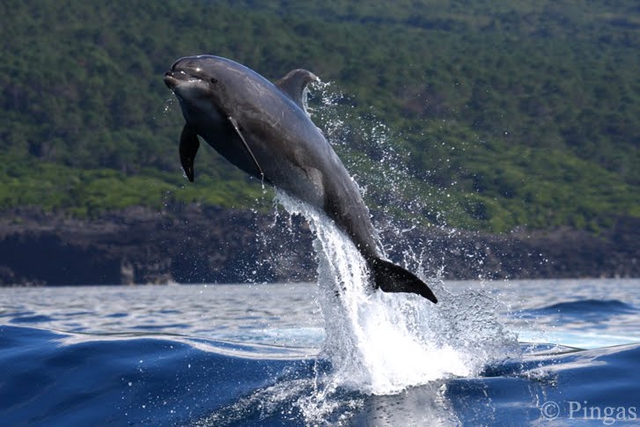
Happy New Year, that is of course if you celebrate at this time of year and best wishes for 2026 from the Marine Mammal Observer Association (MMOA)! As we reflect on the past year and look forward to even greater strides in marine mammal protection, we want to take a moment to express our sincere gratitude for your ongoing support. Your feedback, engagement, and dedication have been instrumental in shaping the future of the MMOA. Thank you for being such a crucial part of our community.
Reflecting on 2024 and Looking Forward to 2026
The MMOA’s 2024 conference and 2025 feedback analysis helped us take a step back and assess what’s working and where we can improve. We're excited to share with you the results and changes we’ve made based on your feedback.
Over 81% of respondents to our 2024 membership survey expressed that they felt they were getting ‘value for money’ through their membership, and we're committed to maintaining this level of excellence moving forward. Your insights have led us to refine our mission and vision for 2026, setting an action plan designed to ensure that our association meets the needs of its members and remains at the forefront of marine mammal conservation.
MMOA Mission & Vision
Mission:
The Marine Mammal Observer Association (MMOA) exists to protect marine mammals by promoting the highest standards of environmental mitigation and professional practice. We provide a platform for professional development, advocacy, and collaboration across science, policy, and industry, supporting mitigation professionals to lead with expertise, integrity, and impact.
Vision:
To be the global standard-bearer in marine mammal protection and the leading resource for professional development, community, and support for mitigation professionals worldwide.
Our Six Priorities
The MMOA works with professionals at all stages of their careers—whether newly qualified or highly experienced—along with industry leaders, government agencies, NGOs, statutory bodies, and academics, to improve the effectiveness of the mitigation profession. We focus on the following six priorities:
-
Set and promote best practice
Developing and sharing evidence-based standards for marine mammal mitigation and monitoring across global offshore industries. -
Support professional development
Providing access to training, technical updates, and mentorship to strengthen skills and career pathways. -
Advocate for effective environmental protections
Engaging with regulators, researchers, and the industry to ensure marine mammal conservation and welfare remain a top priority. -
Encourage a connected global community
Building a collaborative network of mitigation professionals to share knowledge, experiences, and opportunities. -
Enhance representation and voice
Acting as a collective voice in decision-making forums to improve conditions, safety, and recognition in the field. -
Champion inclusion and accessibility
Supporting equity, diversity, and access to professional opportunities across regions and backgrounds.
New & Improved Resources
We’ve listened to your feedback, and we’ve made significant updates to ensure that MMOA membership provides you with the tools and support you need to succeed in the evolving world of marine mammal protection. Here’s a glimpse of what's new for 2026:
-
New Information Directory: We’ve reorganized and expanded our directory to make it even easier for you to access essential information.
-
Updated Resources: Expect fresh content in key areas, including technology, career development, and report filing. Our aim is to ensure you have the latest tools and knowledge at your fingertips.
MMOA 2026 Strategy
In alignment with our new mission and vision, we've set an action plan for 2026, with clear goals and Key Performance Indicators (KPIs) to guide our efforts and track our progress. Here's an overview of our targets:
| Mission Priority | Goal and KPI |
|---|---|
| Set and promote best practice | Publish 2+ updated or new Position Statements biennially |
| Support professional development | 4+ CPD events/resources annually, with 25% member engagement |
| Advocate for effective environmental protections | MMOA input to at least 2 policy consultations annually |
| Encourage a connected global community | Increase global membership by 15% over the next 2 years |
| Enhance representation and voice | Attend 2+ conferences/panels annually; develop 1 media feature/year |
| Champion inclusion and accessibility | Launch 1 EDI initiative annually; track increase in underrepresented members |
Get Involved: We Want Your Feedback!
As always, your voice matters! We want to hear from you regarding the updates above or any other mitigation issues you’d like to address. Whether you’re providing feedback or suggesting new initiatives, your input is invaluable.
Thank You for Your Continued Support
The MMOA would not be where it is today without your contributions. Whether you've attended our conferences, engaged with our resources, or simply spread the word about our mission, your support has been crucial. Looking ahead to 2026, we’re thrilled to keep growing and evolving with you. Stay tuned for more exciting updates, initiatives, and opportunities as we continue to improve and advance marine mammal protection together!
Once again, thank you for being a vital part of the MMOA community. We look forward to another successful year with all of you.
Wishing you a bright and impactful 2026!
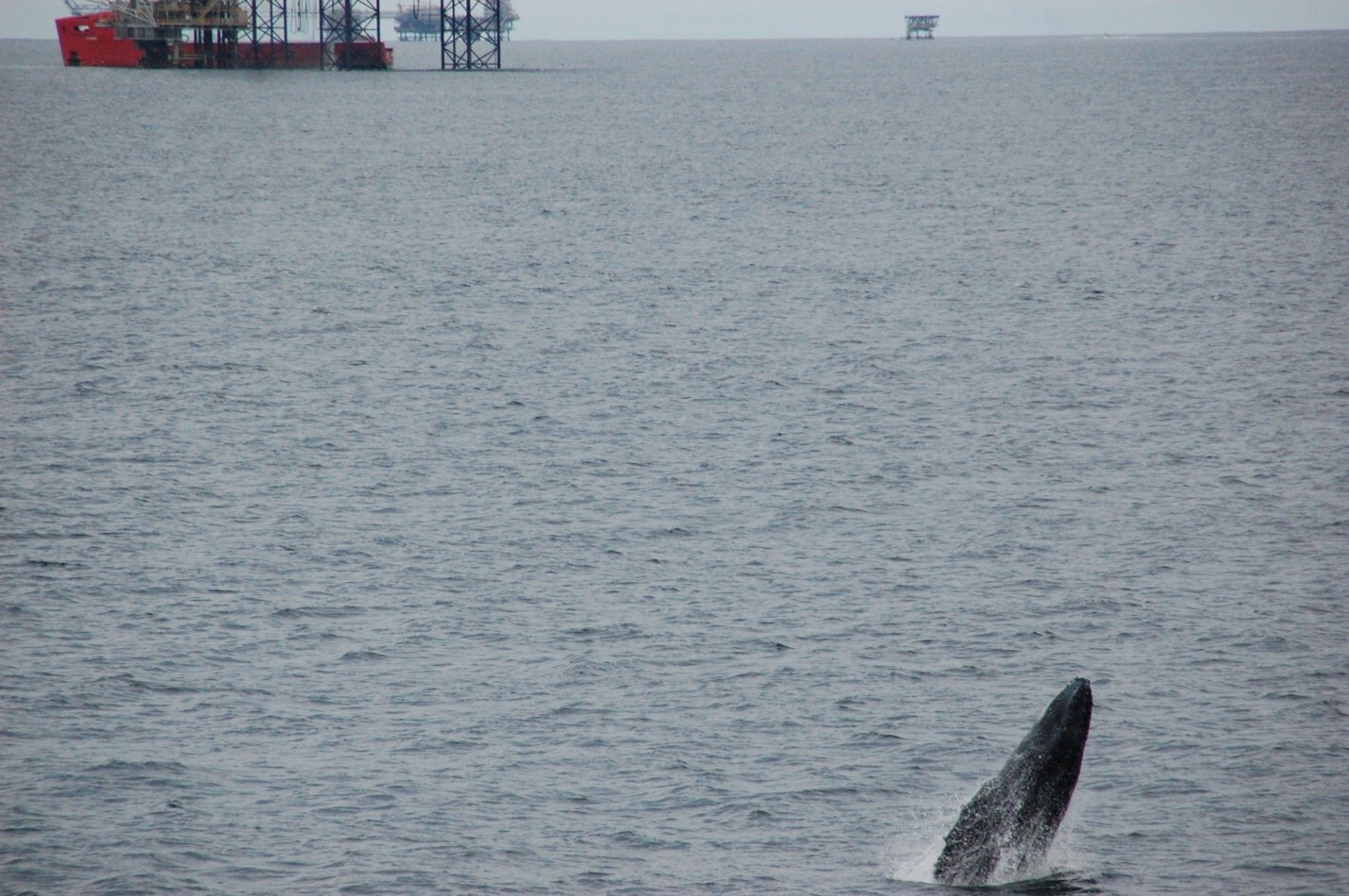
At the MMOA, we recognise the diverse community of marine professionals operating offshore and onshore in our sector, many of whom work as freelancers year-round. As the field season gains momentum and numerous members embark on projects, we speak to Executive Committee member, Oyeronke Adegbile, about what working offshore in Nigeria as a woman means to her.
“My childhood dream was to get involved in ocean adventures. This was because as a child my parents bought me a lot of storybooks from Enid Blyton series to James Hadley chase series; I grew up reading a lot of fiction and non-fiction stories with one of my favourites being the Clive Cussler series and his popular Seafaring adventures. A girl can dream, can’t she? But there were many limitations in the way. I studied Zoology as a bachelor and received a Masters in Fisheries. I then joined the Nigerian Institute of Oceanography and Marine Research in Victoria, Lagos as a researcher in 2008.
One of my first observations was the lack of active marine conservation in Nigeria, my home country and the need to change the narrative; I wanted to be a part of that change. My day job involved research into the biology of the Nigerian continental shelf including the EEZ and the resources it contained. This included going on marine and brackish water field trips and sea turtle and artisanal fisheries surveys; involving; sample collection, laboratory analysis, data analysis and report writing on various research projects.
My childhood dreams to go on ocean expeditions appeared to be coming true. However there were logistical challenges and funding limitations plus field trip opportunities were few and far between, with male researchers being preferred to female researchers. Why? Apparently it was because of their perceived ability to leave the home in the care of their partners and go offshore. Each time I challenged this idea. The question I was always met with was ‘Where will you put your family’. Were my male counterparts being asked this question? I knew that I needed to gain experience for career advancement.
Finally In 2011 there was an opportunity for four researchers to undertake a Marine Mammal Observer (MMO) job offshore the Niger Delta. During a sectional meeting, I stated that we women were also interested and should be granted opportunities. I didn’t know at the time that the head of department was actually listening to me. He asked specifically if I could go, and being one never to reject a challenge, I said ‘Yes!’. When I got home I informed my husband about my decision and when the time came we made the necessary arrangements and he made himself available to care for the kids with the help of my mother. I had the chance and I was sent for the HUET training along with three men in my department.
The HUET training was a little intimidating and rigorous. When I realized I was the only lady at that training, I braced up and passed it. And so the date was set for my first MMO job. I was assigned to be with the senior colleague, Mr Ndubuisi, who was the Lead MMO. We boarded an Arik air flight from Lagos to Portharcourt. Upon arrival at Portharcourt we took a taxi to Onne Port and when we arrived we were taken straight onto the vessel where we stayed for two days before sailing. The vessel, Wilbert Tide’ was a large machine to me at the time. I was apprehensive about sailing on this boat as I had read stories about the vessel being held hostage by pirates along with its crew the previous year. This was about the same time as the spates of kidnapping in Nigeria’s Niger Delta. I boarded with trepidation, and to add to that, I realized I was the only woman on the entire vessel. It became more challenging as I became seasick and it took me nearly a week to finally develop my sea legs and be able to take my turn doing watches.
The most challenging aspect of the trip was that I was the only woman onboard the vessel. Well, also the fear of being kidnapped, but I made up my mind to survive and thrive in a male-dominated industry from day one.
After the first MMO experience, it took another three years to start getting direct inquiries. Each time I put my CV forward, they ended up giving the job to a man. The excuses usually involved accommodation as every room was expected to house two people, and they couldn’t pair me up with a man, or afford to let me have a double room all to myself. At that point I realized there needs to be far more women doing offshore work. So Ladies, are you with me? We need more women in the MMO profession. Other challenges faced by women researchers include finding funding for the HUET and other training, which can be really expensive. There is the challenge of travel costs for transportation and accommodation during training. Not only that but training centers are offered only in a few specific states. Also, a lot of times after they scale the training hurdles ladies are sometimes still unable to secure MMO contracts until the HUET certificates expire because of some of the earlier mentioned limitations, this is usually so painful as sometimes these certificates are obtained with loans in anticipation of work opportunities.
As a child, I was fascinated by stories of mermaids in an underwater world full of mystery and beauty. Years later, I spotted a humpback whale breaching, it was the first of many sightings, but that initial encounter stayed with me for a long time. It was a magnificent and extraordinary sight. Being in the sea breeze on the open ocean can bring you peace and time to ponder the marvels of nature. You can enjoy a real connection to the rhythm and patterns of life at sea with an expansive horizon, and ever changing beautiful scenery, both above and below the waves.
I believe there are still many barriers to women doing this work, not just here in Nigeria, but in many countries globally. In my opinion, we need to scale up. We need more women to get involved in MMO work and marine research to break down the gender barrier. We need to change the gender ratio and encourage a more even mix of all genders doing this important work. What do you say? Are you with me, Ladies? Let’s start working happily offshore both now and in the future.
We value the feedback, ideas, and active participation of our members, which drive the success of our organisation. We encourage both current and prospective members to engage with us, as your contributions are instrumental in shaping our community. Whether sharing insights, project details, or concerns, your input is invaluable. Feel free to email us at
More Articles …
- European Cetacean Society (ECS) Conference 2025 –Ponta Delgada, Azores.
- Notes from the field – MMOA Executive Committee Members
- End of Year Review 2024
- MMOA Celebrates the Appointment of Niru Dorrian as UN Ocean Decade Ambassador
- MMOA Conference
- MMOA Endorsement ESB MMO Training Programme 2024
- Day of the Seafarer and Offshore Etiquette
- JNCC Realeases New PAM Guidelines
- MMOA Champions Best Practices for Conservation at Stakeholder Meeting on Marine Mammal Mitigation
- International Womens Day - Interview with Daniella Bordon
- New Important Marine Mammal Areas (IMMAs) approved!
- ESB marks completion of MMO Training Programme
- Distance Estimation using Reticular Binoculars
- Notes from the Field – MMOA Executive Committee Member John Keth Faeldonia
- Notes from the field – MMOA Member Morgane Belleville
- End of Year Update 2023
- MMOA endorses ESB Marine Mammal Observer Training Programme
- ECS Conference 2023 - O Grove, Galicia, Spain.
- MMOA Members on The Ocean Cleanup
- MMOA attends BEIS/JNCC PAM workshop
